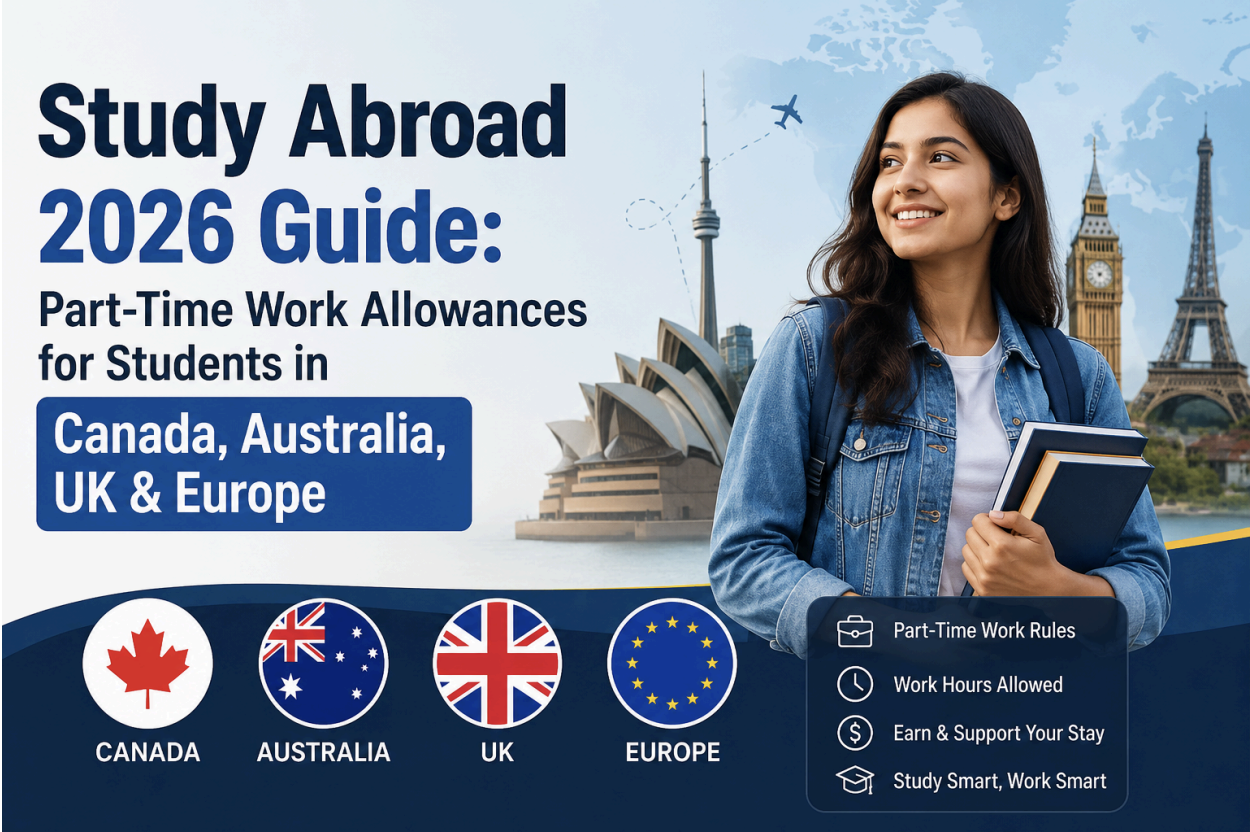
Study Abroad 2026 Guide: Part-Time Work Allowances for Students in Canada, Australia, UK & Europe
For many Indian students, studying abroad is not only about earning an international degree — it’s also about becoming independent, managing living expenses, and gaining global exposure. That’s why one of the most common questions students and parents ask before choosing a country is:
“Can I work part-time while studying abroad, and how many hours are allowed?”
It’s an important question because part-time work can help students support some of their daily expenses such as groceries, transport, and rent. It can also provide practical work experience, improve communication skills, and strengthen a student’s CV. However, there’s one thing every student must understand before planning their finances around part-time work:
Part-time work rules are different in every country
The number of hours you can work, whether you can work full-time during holidays, and whether your visa allows on-campus or off-campus work all depend on the country, your student visa conditions, and your course status.
If you’re planning to study abroad in 2026, understanding these rules early can help you choose the right destination and avoid costly visa mistakes later.
In this guide, we’ll break down part-time work allowances for international students in Canada, Australia, the UK, and popular European destinations, including Germany, France, Ireland, Malta, Latvia, Slovakia, and Croatia.
Why Part-Time Work Rules Matter for International Students
Students often see part-time work as a way to reduce financial pressure while studying abroad. And yes, it can help — but only if you understand the rules and plan realistically.
1. They help you estimate your real budget
If a country allows only limited work hours, you cannot assume you’ll earn enough to cover all your living expenses. Understanding the legal work allowance helps you plan your finances more realistically.
2. They help you compare study destinations better
Two countries may have similar tuition fees but very different student work rules. One may allow flexible off-campus work, while another may have stricter conditions or fewer English-speaking job opportunities.
3. They reduce the risk of visa violations
Working beyond your allowed hours is not a small issue. It can affect your student status, future permits, and immigration history.
4. They help you gain legal work experience
Part-time jobs are not only about money. They also help students build confidence, learn workplace culture, improve communication, and gain practical experience.
Part-Time Work Rules in Canada for International Students in 2026
Canada remains one of the top destinations for Indian students because of its strong education system, multicultural environment, and post-study opportunities.
Can students work while studying in Canada?
Yes. Eligible international students in Canada can work while studying without a separate work permit, as long as their study permit includes the required work conditions.
How many hours can students work in Canada?
In 2026, eligible students in Canada can generally work up to 24 hours per week off campus during regular academic sessions.
Can students work full-time during breaks?
Yes. During officially scheduled breaks such as summer vacations or winter holidays, eligible students can usually work full-time.
What about on-campus work?
Canada is attractive because eligible students can often work on campus without a fixed hour limit, provided they continue meeting their study permit conditions.
Common student jobs in Canada
- Retail Assistant
- Cashier
- Barista or Café Staff
- Restaurant Server
- Warehouse Helper
- Tutor
- Campus Assistant
- Receptionist
Is part-time income enough in Canada?
Part-time work can help with groceries, transport, phone bills, and some rent contribution. But in expensive cities, it may not fully cover living costs. Students should treat it as supportive income, not guaranteed survival money.
Part-Time Work Rules in Australia for International Students in 2026
Australia is a very popular destination among Indian students, especially for courses in business, IT, nursing, engineering, and hospitality.
Can international students work in Australia?
Yes. Students on an eligible Australian student visa are generally allowed to work while studying, as long as they follow their visa conditions.
How are work limits measured in Australia?
Australia usually uses a fortnight-based work limit rather than a simple weekly cap. That means students must track their hours across a 14-day period, not just one week.
Can students work more during holidays?
Yes, in many cases students can work more freely during official course breaks, provided their visa conditions allow it.
Common part-time jobs in Australia
- Café and Restaurant Staff
- Retail Store Jobs
- Supermarket Roles
- Warehouse and Logistics Work
- Housekeeping or Hospitality Support
- Customer Service Jobs
- Campus-Based Roles
Is Australia good for student earnings?
Australia is often considered one of the better destinations for part-time wages. However, cities like Sydney and Melbourne also have high living costs, so students should not assume that higher wages automatically mean easy savings.
Part-Time Work Rules in the UK for International Students in 2026
The UK remains a top choice for Indian students because of its world-class universities, shorter master’s programs, and strong academic reputation.
Can students work while studying in the UK?
Yes. Many international students in the UK can work part-time if their student visa allows it and they are enrolled in an eligible course.
How many hours can students work in the UK?
For many degree-level students, the commonly known rule is up to 20 hours per week during term time.
Can students work full-time during holidays?
In many cases, yes. Students may work full-time during official vacations, depending on their course structure and visa conditions.
Common student jobs in the UK
- Restaurant and Café Jobs
- Retail Roles
- University Department Jobs
- Student Union Roles
- Warehouse Work
- Tutoring
- Receptionist and Customer Service Jobs
Is part-time work enough in the UK?
It can help with day-to-day expenses, but the UK can be expensive, especially in London. Students should not depend on part-time work alone to cover all costs.
Part-Time Work Rules in Europe for International Students
Europe is often discussed as one study destination, but that’s not how student work rights work in reality. Every country has its own immigration laws and work conditions.
So if you’re planning to study in Europe in 2026, you need to check country-specific rules rather than assuming the same rules apply across the continent
Germany: Part-Time Work Rules for Students
Germany is one of the strongest study destinations in Europe because of affordable education, good public universities, and long-term career opportunities.
Can students work in Germany?
Yes. International students in Germany can generally work, but the rule is usually measured in days per year rather than hours per week.
Common Germany work allowance
Students are commonly allowed to work:
- 140 full days per year
- 280 half days per year
Common student jobs in Germany
- Café and Restaurant Jobs
- Research Assistant Roles
- Internships
- Warehouse or Logistics Work
- Tutoring
- Office Support Roles
Important point
Germany can be a great destination, but German language skills can significantly improve job opportunities, especially outside major international cities.
France: Part-Time Work Rules for Students
France is increasingly popular among international students because of its education quality, cultural appeal, and growing number of English-taught programs.
Can students work in France?
Yes. International students in France are generally allowed to work while studying, but within a regulated annual limit.
What kind of jobs do students do in France?
- Cafés and Restaurants
- Retail Roles
- Hospitality Jobs
- Tutoring or Childcare
- University Support Work
Important point
French language skills can make a big difference in finding part-time jobs, especially customer-facing roles
Ireland: Part-Time Work Rules for Students
Ireland is attractive because it offers an English-speaking environment, strong business and tech sectors, and student-friendly work rules.
Can students work in Ireland?
Yes. Eligible international students in Ireland can generally work part-time while studying if they hold the right immigration permission.
Common Ireland work allowance
Students are commonly allowed to work:
- Up to 20 hours per week during term time
- Up to 40 hours per week during certain holiday periods
Common student jobs in Ireland
- Retail Jobs
- Hospitality Roles
- Cafés and Restaurants
- Customer Service Work
- Warehouse Roles
Ireland is a strong option for students who want an English-speaking European destination with relatively clear work rules.
Malta, Latvia, Slovakia & Croatia: What Students Should Know
These countries are becoming more popular among Indian students because of affordability and growing study abroad awareness. However, students should be careful not to choose them only because they expect easy part-time work.
Malta
Malta is attractive because English is widely used and the tourism/hospitality sector can offer some opportunities. However, work rights usually depend on student residence conditions and local work authorization rules.
Latvia
Latvia can be a budget-friendly option, but job opportunities may depend on the city, your language skills, and your residence permit conditions.
Slovakia
Slovakia is relatively affordable, but students should not assume that part-time jobs will be easy to find. English-speaking opportunities and wages may be limited compared to larger destinations.
Croatia
Croatia may offer hospitality and seasonal tourism-related work, but job availability can vary depending on local conditions and the student’s legal status.
The key takeaway:
For these smaller European destinations, part-time work should be seen as a possible advantage, not the main reason to choose the country.
Country Comparison: Part-Time Work Allowances for Students
| Country | Part-Time Work During Study | Holiday Work | Key Notes |
|---|---|---|---|
| Canada | Up to 24 hours/week off campus for eligible students | Full-time during scheduled breaks | On-campus work can be flexible |
| Australia | Usually subject to a fortnight-based limit | More flexible during official breaks | Check latest visa rules |
| UK | Commonly 20 hours/week during term | Often full-time during vacations | Depends on visa and course |
| Germany | 140 full days / 280 half days per year | Based on annual allowance | Language matters |
| France | Subject to annual work-hour limit | Depends on local rules | French helps job access |
| Ireland | 20 hours/week during term | 40 hours/week during holidays | Strong option in Europe |
| Malta / Latvia / Slovakia / Croatia | Depends on local student/work rules | Depends on local rules | Verify before applying |
What Kind of Part-Time Jobs Do International Students Usually Get?
No matter which country you choose, most student jobs abroad fall into a few common categories.
Common student jobs abroad
- Retail Assistant
- Cashier
- Waiter / Server
- Barista or Café Staff
- Warehouse Helper
- Delivery Support Roles (where legally allowed)
- Receptionist
- Tutor
- Campus Assistant
- Customer Service Executive
- Housekeeping or Hospitality Support
What affects whether you’ll find a job quickly?
Your chances depend on:
- Your English Communication Skills
- Local Language Ability
- The City You Study In
- Your Class Schedule
- Previous Work Experience
- Local Job Demand
Students should always focus on legal, documented work. A cash job that violates visa rules can create long-term immigration problems.
Can Part-Time Work Cover Living Expenses Abroad?
This is one of the most common questions from students and parents.
The honest answer:
Part-time work can help with living expenses, but it should not be treated as a guaranteed way to fund your entire study abroad journey.
In many cases, part-time income can help with:
- Groceries
- Transport
- Mobile/Internet Bills
- Personal Expenses
- Part of the Rent
But students should not assume it will fully cover:
- Tuition Fees
- Expensive Accommodation
- Insurance
- Visa and Travel Costs
- Emergency Funds
The smart financial plan:
Your tuition and core living expenses should already be arranged, and part-time work should be treated as additional support.
Important Mistakes Students Make About Part-Time Work Abroad
1. “I’ll pay for everything with part-time work.”
In most cases, that’s unrealistic. Part-time work helps, but it’s rarely enough to fully fund studies and living costs.
2. “If my friend works extra hours, I can too.”
No. Your work rights depend on your own visa conditions. Working beyond your limit can become a visa violation.
3. “All countries allow the same student work rules.”
They don’t. Even within Europe, work conditions vary significantly.
4. “Any cash job is fine if it pays.”
No. Illegal work can affect your immigration future and create tax problems too.
5. “I’ll choose a country only because part-time jobs are available.”
That’s risky. Your decision should also be based on:
- Course Quality
- Tuition Fees
- Cost of Living
- Post-Study Opportunities
- Language Comfort
- Long-Term Career Value
Tips to Find Part-Time Jobs While Studying Abroad
If you want to improve your chances of finding a student job abroad, keep these tips in mind:
1. Prepare a local-style CV
A resume that works in India may not be ideal abroad. Adapt it to the destination country.
2. Use university career services
Many universities have:
- Job Boards
- Career Offices
- CV Review Support
- Interview Guidance
- Campus Job Listings
3. Apply both online and offline
Use LinkedIn, job portals, student groups, university noticeboards, and nearby cafés or stores.
4. Improve communication skills
Even basic part-time jobs often require good customer communication.
5. Learn basic local language phrases
This is especially helpful in Germany, France, Croatia, Latvia, and Slovakia.
6. Avoid fake job promises
Never pay someone for a “guaranteed job abroad.” Real jobs should come from legitimate employers or verified hiring platforms.
FAQs: Part-Time Work Allowances for International Students
Eligible students can generally work up to 24 hours per week off campus during regular academic sessions and full-time during scheduled breaks.
In some countries, yes. Canada, the UK, and Ireland often allow more work during official holidays or scheduled breaks, depending on visa rules.
Canada, Australia, the UK, Ireland, and Germany are often among the stronger options, but the best country depends on your budget, language comfort, and long-term goals.
Usually not. Part-time work is better viewed as support for living expenses rather than a guaranteed source for tuition.
No. Part-time work matters, but students should also compare education quality, tuition fees, living costs, and career opportunities.
Conclusion: Choose a Country for Education First, Work Opportunities Second
Part-time work can be a valuable part of the study abroad journey. It can help students become more independent, manage some daily expenses, and gain practical work experience in a new country. But it should never be treated as the only financial plan or the main reason to choose a destination.
The reality is simple: part-time work allowances for international students vary by country, visa type, and academic schedule. Canada, Australia, the UK, and several European countries all offer work opportunities — but the rules, flexibility, and earning potential are not the same everywhere.
So if you’re planning to study abroad in 2026, take a practical approach:
- Understand the official student work rules of your target country
- Compare tuition and living costs realistically
- Choose a course and destination that fit your long-term goals
- Treat part-time work as support, not guaranteed funding
If you want expert help choosing the right country, course, and visa pathway based on your budget and career plans, professional study abroad guidance can make the process much easier and safer.